 DoorGuard
 How it works
 Plans and pricing
 Try it yourself
 Free Door Health Score
 Garage door guides
 Questions and answers
 Service areas
 Book a visit
 Property managers
 Agents and inspectors
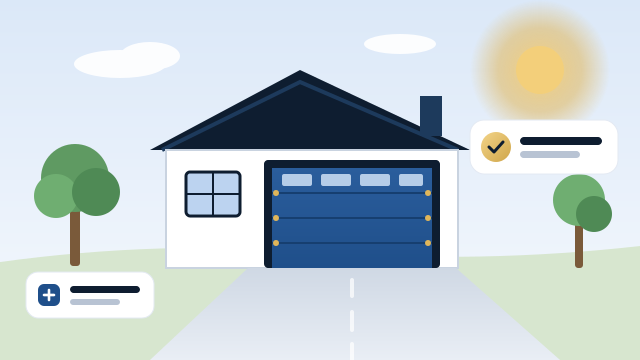
What 25% off the labor looks like
Example only, using $250 of labor. Your costs may differ. The membership does not pay for repairs; members pay 25% less on the labor. Plans from $19 a month.
See the plansWhen a garage door gets louder, the first useful question isn't which part is broken. It's which machine is making the sound. The door and the opener work together, but they're separate, and a noise from one can easily sound like it's coming from the other.
Listening narrows it down. Our guide to a grinding garage door explains how to tell by where the sound comes from. But sound bounces around a garage, and some noises are hard to place. The hand test settles it by taking the opener out of the picture.
Why the hand test works
Once the door is off the opener, the opener isn't moving anything. Any noise you still hear has to come from the door itself: the rollers, hinges, tracks or sections. If the noise disappears, the door is quiet on its own and the sound was coming from the opener. The test also lets you feel how the door moves, which listening alone can't tell you.
Before you try it
The hand test is fine on a healthy door. It is not safe on a door with a spring or cable problem, because the springs are what keep the door from being too heavy to hold. Skip the test and call a professional if you see any of these:
- A gap in a spring above the door, or a spring that looks stretched
- A cable that looks loose, frayed or off its drum
- A door that hangs crooked or has a roller out of its track
- A door that recently made a loud bang
Make sure the door is fully closed before you start. Never pull the release on a door that's open or partly open. Keep kids and pets out of the garage while you work.
The hand test, step by step
- Close the door fully with the opener.
- Pull the red manual release cord. On many openers you pull it down and toward the back of the garage. The door is now off the opener.
- Grip the handle on the inside of the door or the bottom section. Keep your fingers out of the gaps between sections.
- Lift slowly to about waist height, listening the whole way. Then lower it gently.
- Do it once more and watch the rollers and hinges as the door moves.
- Close the door fully and reconnect the opener the way your manual describes. Many reconnect the next time you run the opener.
Not sure how your door is doing? Answer 7 quick questions and get a 0 to 100 score with an A to F grade in about 60 seconds. No email needed. Take the free checkup.
What the result tells you
The noise is gone. The door is quiet on its own, so the opener is the likely source. Grinding or growling from the motor unit often points to worn gears. A slap or rattle along the rail can be a loose or dry chain. Our guide to the signs an opener is wearing out explains what to look at next.
The noise is still there. It's coming from the door. Squeaks that travel with the door usually come from dry hinges or roller bearings. Scraping along the sides points to worn rollers, dirt in the tracks or a bent track. Rattling usually means loose hinge or bracket screws.
The door is quiet by hand but loud with the opener. Sometimes each one is fine alone and the noise comes from where they connect. A loose arm where the opener attaches to the top section, a worn trolley on the rail or loose brackets holding the opener to the ceiling can rattle only when the opener is pulling. Those are worth a professional look.
What to notice while you lift
The test also tells you how the door moves. Pay attention to:
- Effort. A healthy door lifts with steady, moderate effort. If it feels very heavy, stop and lower it. Our guide to a door that's hard to open by hand explains what that means.
- Where it settles. Let go carefully around waist height with your hands ready. A balanced door stays about where it is. If it drops or rises, see signs your door is out of balance.
- The rollers. They should turn, not slide.
- One rough spot. A catch at the same point on every lift often means a dent in the track or a worn roller there.
Fixing what you found
If the noise came from the door, the safe steps are cleaning and lubricating. With the opener unplugged, wipe out the tracks with a dry cloth and use a lubricant made for garage doors on the hinges and roller bearings, as shown in our lubrication guide. Snug up loose hinge screws, but leave the bottom brackets alone.
If it came from the opener, follow your manual for any care it calls for and leave the inside of the motor unit to a professional. Don't change the opener's force or travel settings to quiet it. For a quick rundown of what each kind of sound tends to mean, see our guide to garage door noises.
Call a professional if the noise comes back after cleaning and lubricating, a track is bent, a roller is cracked, the door feels heavy or you hear a bang. A yearly tune-up checks the door and the opener together, which is often the easiest way to catch both.
DoorGuard membership starts at $19 a month. Every plan includes a yearly tune-up and safety inspection, priority scheduling if something goes wrong, and 25% off repair labor, with the price shown before any work begins. No contract, cancel anytime. See membership plans.