 DoorGuard
 How it works
 Plans and pricing
 Try it yourself
 Free Door Health Score
 Garage door guides
 Questions and answers
 Service areas
 Book a visit
 Property managers
 Agents and inspectors
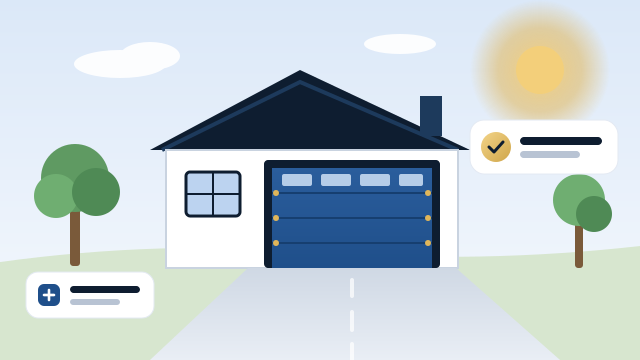
What 25% off the labor looks like
Example only, using $250 of labor. Your costs may differ. The membership does not pay for repairs; members pay 25% less on the labor. Plans from $19 a month.
See the plansSteel is tough, low maintenance and holds its shape well. But low maintenance isn't no maintenance. The finish on a steel door is what keeps rust away, and once that finish gets scratched or worn, moisture finds the metal underneath.
A little care a few times a year keeps the finish doing its job.
Know what kind of steel door you have
Steel garage doors aren't all alike, and the differences change how you care for them.
- Smooth or textured painted steel. The most common. The steel gets a protective coating, then a baked-on factory paint. This finish handles gentle washing and, on many doors, wax.
- Wood grain stamped steel. A wood grain pattern pressed into painted steel. It cleans like any painted door, but dirt settles in the grain, so a soft brush works better than a cloth.
- Wood look finishes. Some doors have a printed or film finish made to look like real wood. These often have their own care rules, and some shouldn't be waxed or painted. Check the maker's guide.
- Steel thickness. Steel is sold by gauge, and a lower gauge number means thicker steel. Thinner steel dents more easily.
If you have your door's care guide, it's the final word. The wrong cleaner can dull or damage some finishes.
Washing it the right way
- Use mild soap and a soft brush. Car wash soap or a little mild dish soap in warm water works for most doors. A car wash brush on a pole reaches the top sections.
- Work from the top down. Wash and rinse one section at a time so soap doesn't dry on the door.
- Skip the pressure washer. A garden hose is enough, since a pressure washer can strip the finish and force water into seams.
- Skip harsh products. Bleach, solvents, scrub pads and steel wool can strip or scratch the finish. Steel wool can also leave tiny bits of metal behind that rust on the surface.
For windows and decorative inserts, see our guide to window and panel care. Near the coast, our guide to humid and coastal areas explains rinsing off salt.
Wax protects painted steel
On a factory painted door, a coat of non-abrasive car wax once or twice a year helps water bead off and slows fading. Apply it to a clean, dry door out of direct sun and buff it off with a soft cloth.
Skip wax on wood look film finishes unless the maker says it's fine. Doors that face strong sun benefit the most, and our hot climate care guide has more on sun and heat.
Not sure how your door is doing? Answer 7 quick questions and get a 0 to 100 score with an A to F grade in about 60 seconds. No email needed. Take the free checkup.
What steel finishes don't like
- Sprinklers. Constant spray leaves hard water spots and keeps the bottom sections wet. Aim sprinkler heads away from the door.
- Lawn and pool chemicals. Fertilizer overspray, pool chlorine and similar products can eat at the finish and the hardware. Store them away from the door and rinse off any overspray.
- Road salt. In winter, salty slush that drips off the car collects at the bottom of the door. Rinse it off when the weather allows.
- Things leaning on it. Bikes, ladders and bins scratch the paint inside and out.
Scratches and rust
A scratch through the paint is an opening for rust. Clean the spot, let it dry and touch it up with matching exterior paint or the touch-up paint your door's maker sells. If rust has already started on a panel, our guide to rust on a garage door walks through what to do and what to leave alone.
Painting a steel door
If the color has faded or you want a new one, a steel door can usually be repainted. Check the maker's guide first. Then:
- Clean the door well and let it dry.
- Use an exterior paint made for metal, in thin coats.
- Paint with the door closed, and keep paint off the weatherstripping, rollers, hinges and tracks.
- Let the paint dry fully before running the door so the sections don't stick at the joints.
- Leave the springs, cables and bottom brackets unpainted and untouched.
Dents
A shallow dent that hasn't cracked the paint is mostly cosmetic. A dent that creases a section, bends its edge or sits near a hinge is different. It can stop the door from rolling smoothly over the curve of the track. Don't hammer it or pull it out. Have a professional check it, since some damaged sections need replacing.
Watch the weight
The springs are set for your door's weight as it is. Heavy decorative hardware, add-on insulation and thick coats of paint all add weight.
If you're planning a change like that, ask a professional whether the balance needs to be reset afterward. Springs, cables and bottom brackets are under high tension, so if you see rust on any of them, note it and call a professional. A yearly tune-up checks those parts and tests the balance.
DoorGuard membership starts at $19 a month. Every plan includes a yearly tune-up and safety inspection, priority scheduling if something goes wrong, and 25% off repair labor, with the price shown before any work begins. No contract, cancel anytime. See membership plans.