 DoorGuard
 How it works
 Plans and pricing
 Try it yourself
 Free Door Health Score
 Garage door guides
 Questions and answers
 Service areas
 Book a visit
 Property managers
 Agents and inspectors
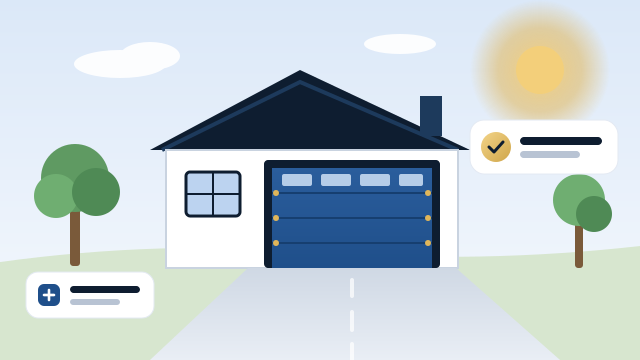
What 25% off the labor looks like
Example only, using $250 of labor. Your costs may differ. The membership does not pay for repairs; members pay 25% less on the labor. Plans from $19 a month.
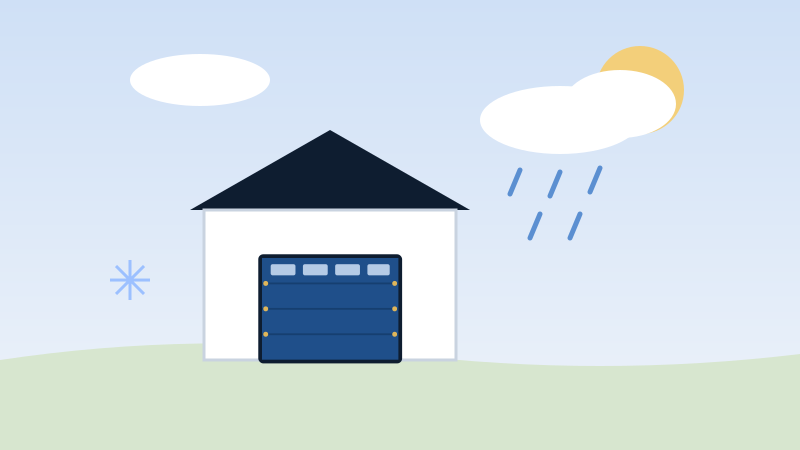
See the plansThe garage door is often the largest opening on a house. When strong wind and heavy rain come through, it takes a lot of the force on that side of the home. A door in good condition, with tight hardware and working seals, does its job much better than one that has been ignored.
Storm prep for a garage door is mostly a matter of checking things before the season starts, so you are not scrambling when a forecast turns. Here is a calm way to go about it.
Start with a look over
Close the door and look at it from inside the garage and from the driveway. You are looking for:
- Dents, cracks or bent sections. Damaged panels are weaker panels.
- Loose hardware. Hinges, track brackets and the screws that hold them. Snug up loose hinge and track screws, but leave the bottom brackets alone, since they connect to the cables.
- Rust or wear on springs and cables. Look only. A gap in a spring or a frayed cable needs a professional before storm season, not after.
- Track condition. Tracks should be straight and firmly attached to the wall. A bent track or a door that rubs is worth having a professional fix now.
Our list of spring warning signs is a helpful guide for the parts you shouldn't touch.
Seals and drainage
Wind-driven rain finds its way under and around a garage door. Check the bottom seal for cracks, gaps and flat, hardened spots. If you see daylight under the closed door, it is time for a new seal. Look at the weatherstripping along the sides and top as well.
Clear leaves, sand and debris from the threshold and the driveway drain if you have one, so water can move away from the door instead of pooling against it.
Ask about your door's wind rating
In areas that see strong storms, garage doors are often built and labeled to handle a certain level of wind. Some doors have a label on the inside that shows this. Building requirements vary by area, so your local building department is the place to ask what applies to your home.
Some doors can be fitted with reinforcement or bracing made for that specific door. Whether that is an option depends on the door, so ask a professional instead of adding homemade supports. Braces or boards attached the wrong way can put stress in the wrong places or get in the way of the door's moving parts.
Want a quick read on your door before the season starts? Answer 7 quick questions and get a 0 to 100 score with an A to F grade in about 60 seconds. No email needed. Take the free checkup.
Get ready for a power outage
Storms and outages tend to go together. Before the season starts:
- Learn the manual release. Find the red cord on the opener rail and practice using it with the door fully closed. We walk through it in how to open your garage door during a power outage.
- Test the battery backup. If your opener has one, check that it works and replace the battery if the manual says it is due.
- Keep a flashlight in the garage. Somewhere easy to find by feel.
- Plan where the generator goes. Never run one inside the garage, even with the door open. It produces carbon monoxide.
When a storm is on the way
- Keep the garage door closed. An open or partly open door lets wind into the garage.
- Move bikes, bins and tools away from the door and tracks so nothing gets thrown against them.
- Bring in outdoor items near the driveway that wind could push into the door.
- If you park inside, pull the car in early and leave room around the door.
- Don't open the door in high wind to check on things. Wait until it passes.
After the storm
Before you run the opener, look the door over. Check for dents, bent sections, a door that sits crooked, a cable that looks loose or off its drum, or a roller that has popped out of the track.
If you see any of those, don't run the opener. Forcing a damaged door can make it worse. Our guide to a door that won't close explains common problems once things are back to normal.
If everything looks right, run the door through a full cycle and listen. New grinding, popping or scraping can point to damage you can't see. Then test the safety sensors and auto-reverse. Our garage door safety guide explains how.
Leave the heavy parts to a professional
Springs, lift cables and bottom brackets are under high tension in any weather. Don't adjust or repair them yourself, before or after a storm. A yearly tune-up timed before storm season is an easy habit. It checks springs, cables, balance, hardware and the opener, so small problems get handled while the weather is calm. Here is what a tune-up actually checks.
DoorGuard membership starts at $19 a month. Every plan includes a yearly tune-up and safety inspection, priority scheduling if something goes wrong, and 25% off repair labor, with the price shown before any work begins. No contract, cancel anytime. See membership plans.