
Short answer: Rust on garage door panels is usually cosmetic at first. Wash it, remove loose rust, then prime and paint with products made for exterior metal or the touch-up paint your door maker recommends. Rust on hinges, rollers and tracks calls for cleaning and the right lubricant. Rust on springs or cables is different: it weakens parts under heavy tension, so leave those alone and call a professional.
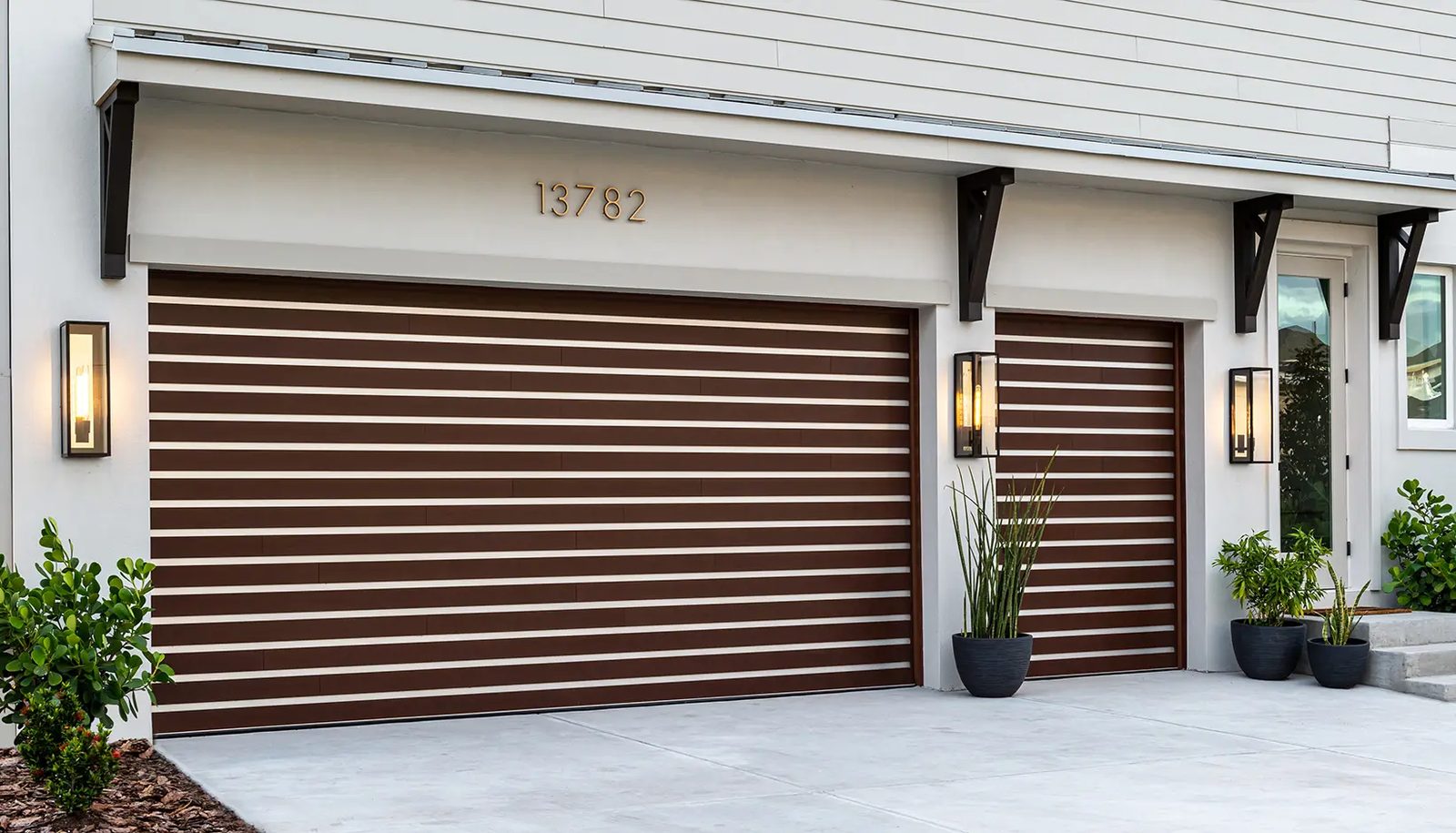
Rust on a garage door is easy to ignore. It starts as a few orange spots at the bottom edge and spreads slowly. Where the rust is matters more than how much there is. Rust on a panel is a looks problem for a long time. Rust on a spring or cable is a safety problem. Here's how to handle each spot, and which ones to leave for a professional.
If you live near the coast or somewhere humid, check more often. Our guide to garage door care in humid and coastal areas covers the bigger routine.
Surface rust on a steel panel is a homeowner job if you take it slow. Close the door and unplug the opener first so no one runs it while you work.
If rust has eaten through the metal, or the panel is soft or crumbling, paint won't fix it. That section may need replacing. Our window and panel care guide covers dents and cracks.
Light rust on moving hardware usually means it has gone too long without care.
Not sure how your door is doing? Answer 7 quick questions and get a 0 to 100 score with an A to F grade in about 60 seconds. No email needed. Take the free checkup.
In a damp garage, a chain drive opener can show surface rust too. Follow your opener manual for any lubricant on the chain, and don't spray the motor unit. If the rail is badly rusted or the chain is dragging, have it looked at. Leave the opener's settings alone.
This is the part to take seriously. Springs and cables carry the weight of the door, and rust eats into them and makes them more likely to snap. Rust also adds friction between the coils of a spring, which wears it faster.
Call a professional to check them. Our cable warning signs show what to look for, and our spring warning signs cover the springs.
A professional tune-up includes an inspection of the springs and cables and lubrication of all moving parts. That means the rust in the places you shouldn't touch gets looked at at least once a year, before it turns into a snapped cable on a busy morning.
DoorGuard memberships start at $19 a month. It includes a yearly tune-up and safety inspection, priority scheduling if something goes wrong, and member savings on repair labor, with the price shown before any work begins. No contract, cancel anytime. See membership plans.
Join today for your annual tune-up, priority service, and member repair savings.
On panels it's mostly cosmetic at first, but it spreads. On springs and cables it's a safety issue, because rust weakens parts that hold the door's weight.
Light rust usually means they've gone too long without care. Wipe the hinges and lubricate them and the roller bearings. A rusted roller that no longer turns should be replaced by a professional.
No. Springs are under heavy tension. Don't sand, brush or treat them yourself. Have a professional inspect any spring or cable that shows rust.
Water, road salt and slush collect at the bottom edge, especially where the seal is worn or the paint is chipped. Rinsing the door and keeping the seal in good shape helps.