
Short answer: Before storm season, look over the door and hardware, snug up loose hinge and track screws but leave the bottom brackets alone, replace a worn bottom seal, and clear the threshold so water can drain. Learn the manual release and test any battery backup in case the power goes out. Keep the door closed during a storm, and check it over before using it afterward. Springs, cables and any bracing questions go to a professional.
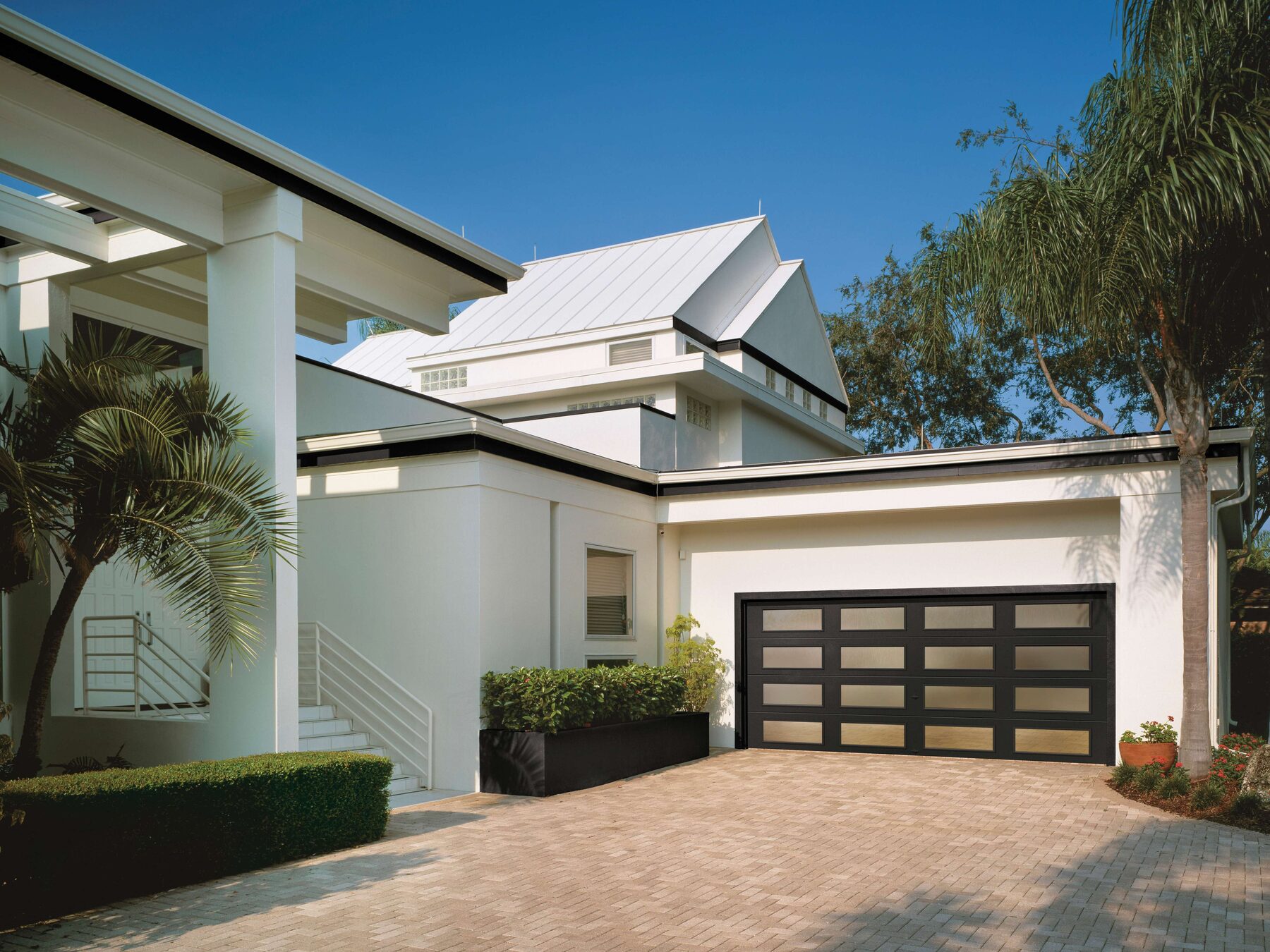
The garage door is often the largest opening on a house. When strong wind and heavy rain come through, it takes a lot of the force on that side of the home. A door in good condition, with tight hardware and working seals, does its job much better than one that has been ignored.
Storm prep for a garage door is mostly a matter of checking things before the season starts, so you are not scrambling when a forecast turns. Here is a calm way to go about it.
Close the door and look at it from inside the garage and from the driveway. You are looking for:
Our list of spring warning signs is a helpful guide for the parts you shouldn't touch.
Wind-driven rain finds its way under and around a garage door. Check the bottom seal for cracks, gaps and flat, hardened spots. If you see daylight under the closed door, it is time for a new seal. Look at the weatherstripping along the sides and top as well.
Clear leaves, sand and debris from the threshold and the driveway drain if you have one, so water can move away from the door instead of pooling against it.
In areas that see strong storms, garage doors are often built and labeled to handle a certain level of wind. Some doors have a label on the inside that shows this. Building requirements vary by area, so your local building department is the place to ask what applies to your home.
Some doors can be fitted with reinforcement or bracing made for that specific door. Whether that is an option depends on the door, so ask a professional instead of adding homemade supports. Braces or boards attached the wrong way can put stress in the wrong places or get in the way of the door's moving parts.
Want a quick read on your door before the season starts? Answer 7 quick questions and get a 0 to 100 score with an A to F grade in about 60 seconds. No email needed. Take the free checkup.
Storms and outages tend to go together. Before the season starts:
Before you run the opener, look the door over. Check for dents, bent sections, a door that sits crooked, a cable that looks loose or off its drum, or a roller that has popped out of the track. If you see any of those, don't run the opener. Forcing a damaged door can make it worse. Our guide to a door that won't close covers common problems once things are back to normal.
If everything looks right, run the door through a full cycle and listen. New grinding, popping or scraping can point to damage you can't see. Then test the safety sensors and auto-reverse. Our garage door safety guide explains how.
Springs, lift cables and bottom brackets are under high tension in any weather. Don't adjust or repair them yourself, before or after a storm. A yearly tune-up timed before storm season is an easy habit. It checks springs, cables, balance, hardware and the opener, so small problems get handled while the weather is calm. Here is what a tune-up actually checks.
DoorGuard membership starts at $19 a month. Every plan includes a yearly tune-up and safety inspection, priority scheduling if something goes wrong, and member savings on repair labor, with the price shown before any work begins. No contract, cancel anytime. See membership plans.
Join today for your annual tune-up, priority service, and member repair savings.
Look over the door and hardware, tighten loose hinge and track screws, replace a worn bottom seal, clear the threshold, learn the manual release and test any battery backup. Keep the door closed during the storm.
Only with bracing made for your specific door, and ask a professional first. Homemade supports can put stress in the wrong places or get in the way of moving parts.
Many doors built for high wind areas have a label on the inside of the door. Your local building department can tell you what requirements apply where you live.
Look it over first. If you see dents, bent sections, loose cables or rollers out of the track, don't run the opener. Have a professional check it.